Contact
Awnings are viewed from below as well as from the exposed face. On a terrace shade project, record the desired transmitted light, stripe direction and visible surface texture before making a colour choice. Compare physical specimens with the same face toward the observer and note the lighting used. Surface contact also matters: handling during fabrication and cleaning after installation are different exposures. Ask for the applicable care instructions, and consider whether cleaning access will allow those instructions to be followed. This is an application review pathway, not a substitute for a material-specific maintenance record.
Exposure
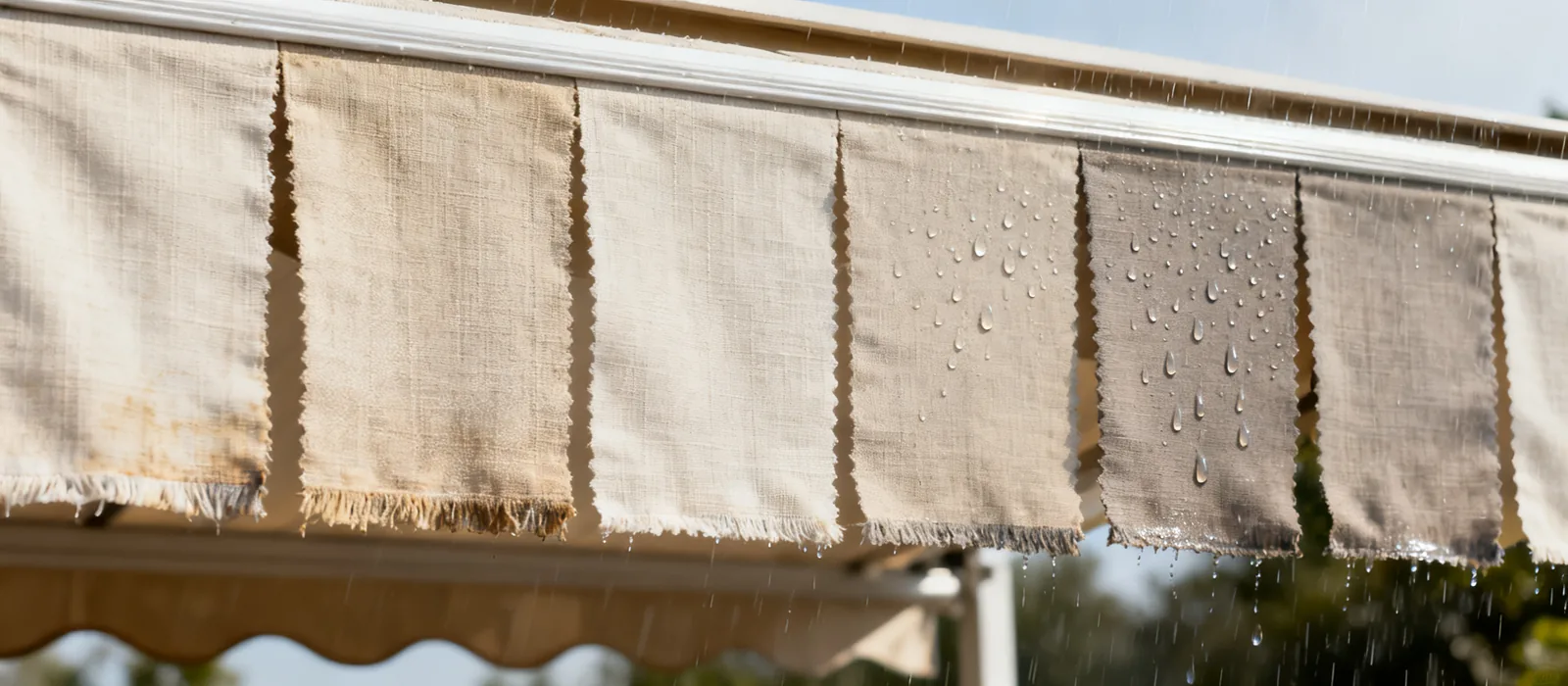
For an exposed frontage, distinguish sun exposure from occasional or repeated wetting. Colorfastness and water behaviour deserve separate evidence. A spray response concerns surface wetting; hydrostatic head addresses resistance to water pressure under a stated method. Water vapor transmission is another property again, and should not be inferred from either result. A coating may address one requirement while changing handle or care; a laminate introduces layer and interface questions. Evaluate the actual construction proposed for the setting, including sample condition and pretreatment, rather than assigning one outdoor performance label to every cloth.
Processing
Fabrication connects the roll to the shade panel. Request usable width in centimetres and roll length in metres so that the cutting discussion uses compatible units. Record warp alignment and any directional pattern with the specimen. Seam slippage, tear strength and joining compatibility each describe a different risk, so select the question that matches the planned assembly. A small joined trial can help review seam appearance and handling before a cutting layout is finalised. Fabric tests alone do not establish drainage, wind suitability or support design for an entire awning; those decisions need the complete assembly context.
Keep the result of each review as a decision record: intended setting, specimen identity, observations and the next unanswered question. When moving between projects, revisit exposure and cleaning assumptions even if the same nominal cloth is being considered.